

As the EU marks the 75th anniversary of the Schuman Declaration, Europe celebrates unity while confronting geopolitical uncertainty, democratic backsliding, and the race for digital leadership.
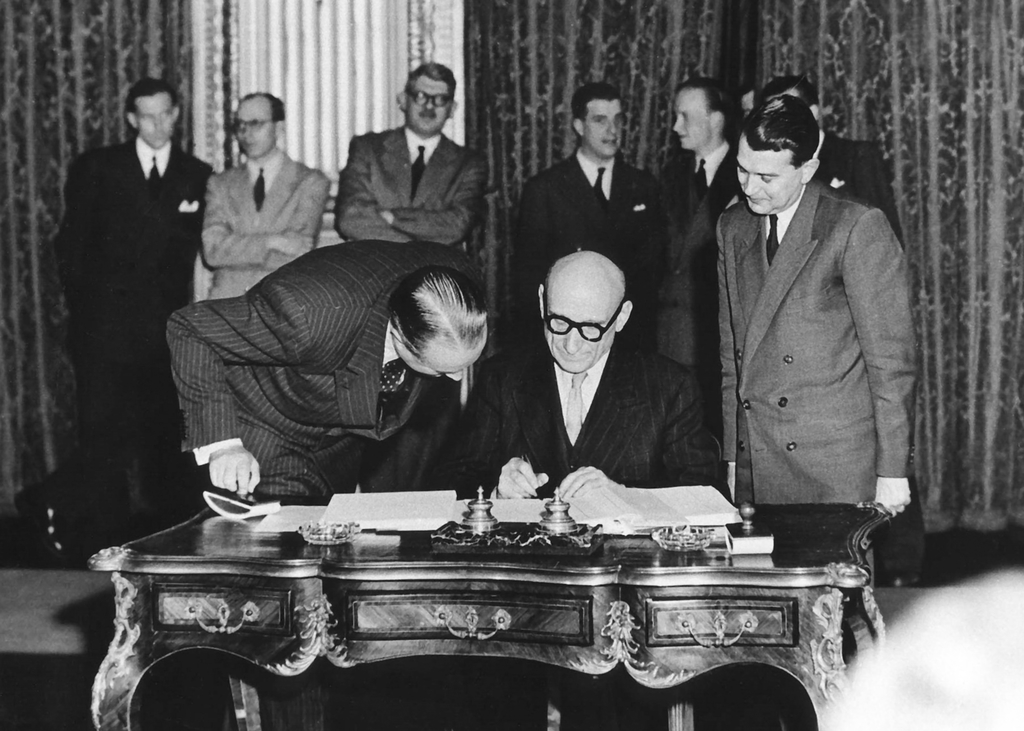
On 9 May 2025, citizens across Europe are once again celebrating Europe Day, a symbolic occasion that commemorates the signing of the Schuman Declaration in 1950—widely seen as the starting point of the European integration project. Seventy-five years after Robert Schuman proposed pooling coal and steel production to make war between European nations “not merely unthinkable, but materially impossible,” the European Union stands as a testament to that vision. Yet today, it also faces a range of new and pressing challenges that test the durability of its founding ideals.
In Brussels, Strasbourg, and Luxembourg, the heart of EU institutions, Europe Day is being marked with open-door events, exhibitions, and public forums. Citizens are invited to engage directly with the work of the EU and reflect on the union’s past, present, and future. This year’s theme, “Shaping the Future of the EU Together,” emphasizes the need for solidarity and strategic cooperation in an era defined by rapid change and growing instability.
However, behind the festive mood and European flags waving across the continent lies a growing awareness that the EU is navigating one of the most complex phases in its history. The war in Ukraine continues to dominate the Union’s foreign and security agenda, pushing member states to deepen defense cooperation, reduce energy dependence, and accelerate discussions on enlargement. At the same time, the return of geopolitical rivalry—especially with Russia and China—has challenged the EU’s role as a soft power and forced it to reconsider its place in a multipolar world.
Internally, the Union grapples with democratic backsliding in some member states, rising populism, and increasing distrust in institutions. Despite high voter turnout in the 2024 European elections, concerns over disinformation, hate speech, and political polarization have sparked renewed debate over how to protect democratic values and media freedom within the EU’s borders.
Europe’s digital and technological future is another point of concern. As global powers race ahead in artificial intelligence, quantum computing, and digital infrastructure, the EU is striving to assert its regulatory leadership without losing competitiveness. The European Commission’s recent efforts to frame digital transformation within a human-centered, rights-based model reflect this delicate balancing act. Yet questions remain about whether Europe can truly achieve digital sovereignty while maintaining an open, innovation-friendly market.
Meanwhile, the ambitious European Green Deal remains a central pillar of the EU’s forward-looking agenda. But as the climate crisis intensifies, so do the challenges of ensuring that the green transition is socially just and economically viable. For many citizens, especially in lower-income regions or sectors reliant on carbon-intensive industries, the transition brings uncertainty and the need for stronger support mechanisms.
Adding further complexity are ongoing debates about the EU’s institutional future. With Ukraine, Moldova, and several Western Balkan countries seeking membership, the Union faces a strategic dilemma: how to expand its borders while also reforming its governance structures to remain effective and cohesive.
As events unfold across the EU, from educational workshops to cultural performances, Europe Day 2025 invites not only celebration but reflection. It reminds Europeans that unity is not a given but a choice, renewed in each generation. Amid global turbulence and internal strain, the European project remains a work in progress—one whose outcome depends, as ever, on the will of its people.
 journoeurope.com