

After Jürgen Habermas, Europe faces a defining test: its democracy must survive without the voice that helped shape and sustain it.
The death of Jürgen Habermas marks more than the loss of a philosopher; it signals the end of an era in which Europe could still imagine itself through a shared democratic horizon. For decades, Habermas stood as one of the most persistent voices insisting that democracy in Europe must move beyond the nation-state without abandoning it.
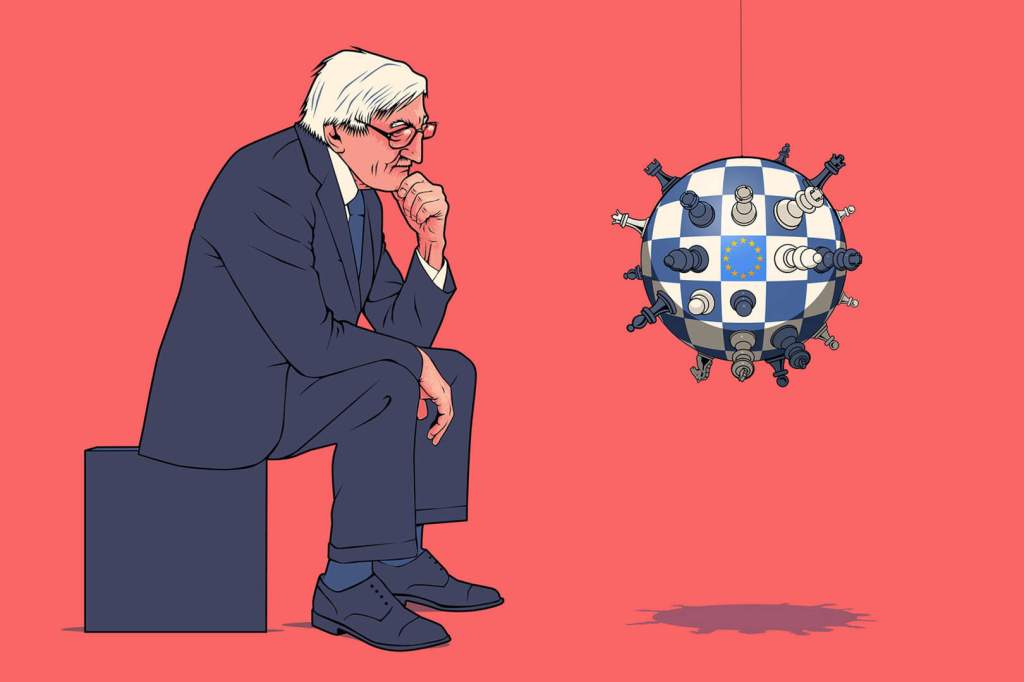
At the heart of his contribution was a simple but demanding idea: democracy is not merely a system of institutions, but a process of communication. His theory of the public sphere and deliberative democracy argued that legitimacy arises from rational, inclusive debate among citizens. In this sense, Habermas did not just interpret European democracy, he helped shape its moral vocabulary.
Nowhere was this more evident than in his vision for European integration. Habermas challenged Europe to become something unprecedented: a supranational democracy. He argued that the European Union should evolve beyond an alliance of sovereign states into a political community where sovereignty is shared and exercised democratically at the European level. This required not only institutional reform, but also a transformation in political imagination and a willingness of nations to relinquish exclusive control in the name of common governance and solidarity.
In this regard, Habermas can rightly be seen as a “godfather” of European democracy. He reformulated what many considered an impossible paradox: how to build a democratic order beyond the nation-state. His answer was neither a centralized superstate nor a loose intergovernmental system, but a democratic union of democratic states an evolving political form grounded in shared values and mutual accountability.
Yet, writing ‘After Habermas’ also requires confronting the limits of his vision. Critics have argued that his universalist framework, rooted in European intellectual traditions, overlooked the asymmetries and exclusions embedded in that very project. From this perspective, his death symbolizes not only the passing of a thinker, but also the fading of a certain confidence in Europe’s claim to universal reason.
And still, his ideas remain strikingly relevant. At a time when European democracy faces internal fragmentation and external pressure, Habermas’s insistence on dialogue, solidarity, and democratic legitimacy offers a demanding standard rather than a finished solution. If Europe is to endure as a democratic project, it may have to return critically, but seriously to the questions he posed.
After Habermas, the task is no longer to follow his answers, but to prove that his questions still matter.

