
A decade after Brexit, the United Kingdom confronts a structural economic slowdown and deepening political instability, raising renewed questions about the viability of its post-EU trajectory.
Ten years after the United Kingdom formally set in motion its exit from the European Union, the consequences of Brexit continue to define both its economic performance and political stability. Once framed as a project of regulatory autonomy and global economic reorientation, Brexit is now increasingly assessed through the lens of prolonged stagnation, weakened investment flows, and persistent institutional volatility.
The Trillion-Pound Question
Recent reporting suggests that Britain’s economic output is significantly lower than pre-referendum projections had anticipated. According to multiple estimates cited in international media, the UK economy may have lost over £ 1 trillion in cumulative output since the 2016 referendum, reflecting reduced trade intensity, weaker productivity growth, and constrained investment inflows. Analysts also suggest that Brexit has lowered long-term GDP levels by several percentage points compared to a counterfactual scenario of continued EU membership.
These macroeconomic effects are increasingly visible in the structure of UK-EU trade relations. Post-Brexit regulatory barriers, customs frictions, and compliance costs have altered the composition of British exports, disproportionately affecting small and medium-sized enterprises that previously depended on frictionless access to the Single Market. Economic analyses indicate that while Brexit did not trigger an immediate recessionary shock, it has produced a sustained drag on productivity and trade expansion over the long term.
Economic Frustration and Political Fallout
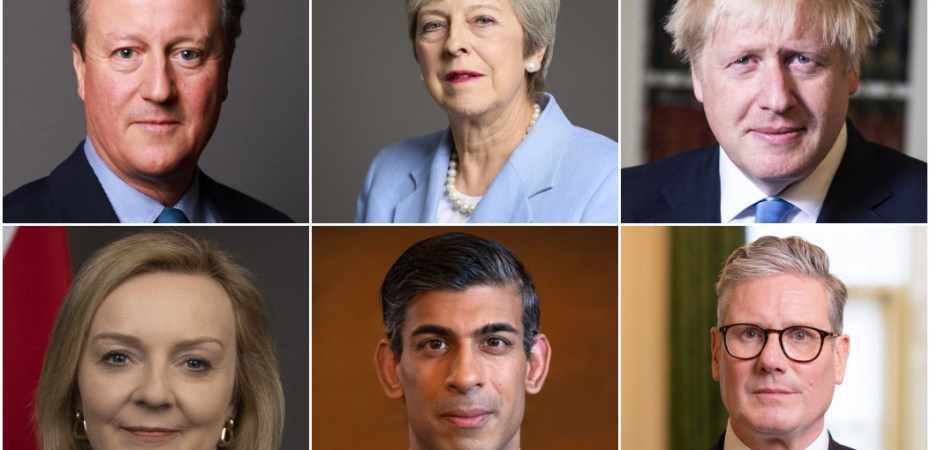
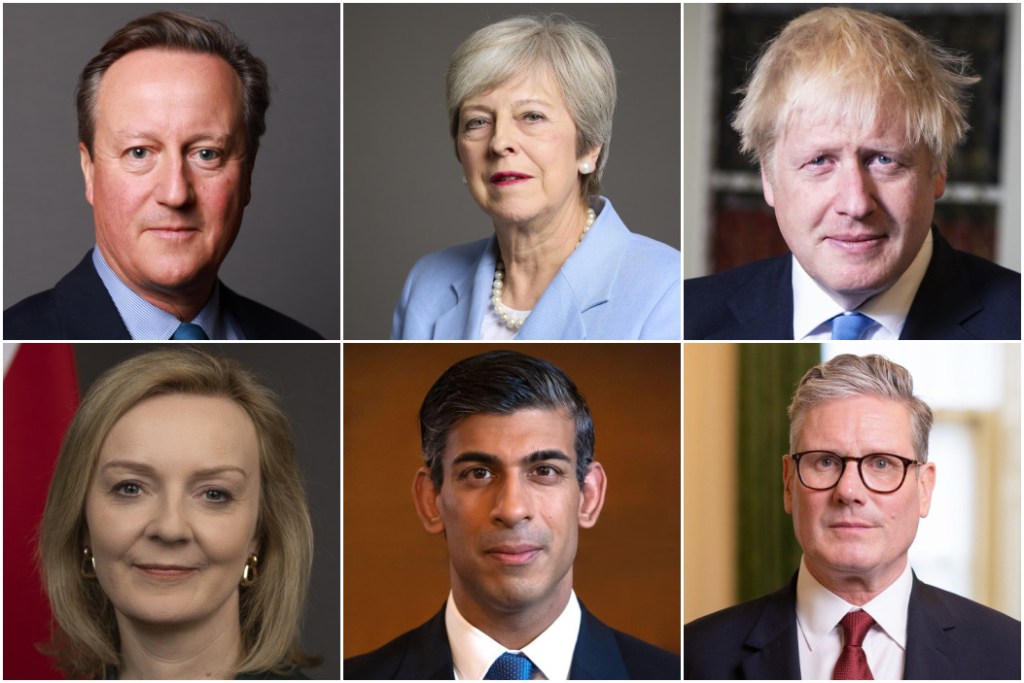
The political consequences of this economic trajectory have been equally significant. Brexit has coincided with a period of extraordinary political turnover in the United Kingdom, characterized by repeated leadership changes, party fragmentation, and declining public trust in governing institutions. The resignation of Prime Minister Keir Starmer—reported amid mounting political and economic pressure adds to a broader pattern of instability that has defined the post-referendum era.
Within this environment, Brexit has become both an economic and political referent point for competing narratives. While some actors frame the current stagnation as evidence of incomplete Brexit implementation rather than structural failure, others interpret it as a long-term competitiveness problem rooted in reduced integration with European markets. This discursive divide has contributed to the rise of anti-establishment political movements and intensified polarization between competing visions of Britain’s post-EU future.
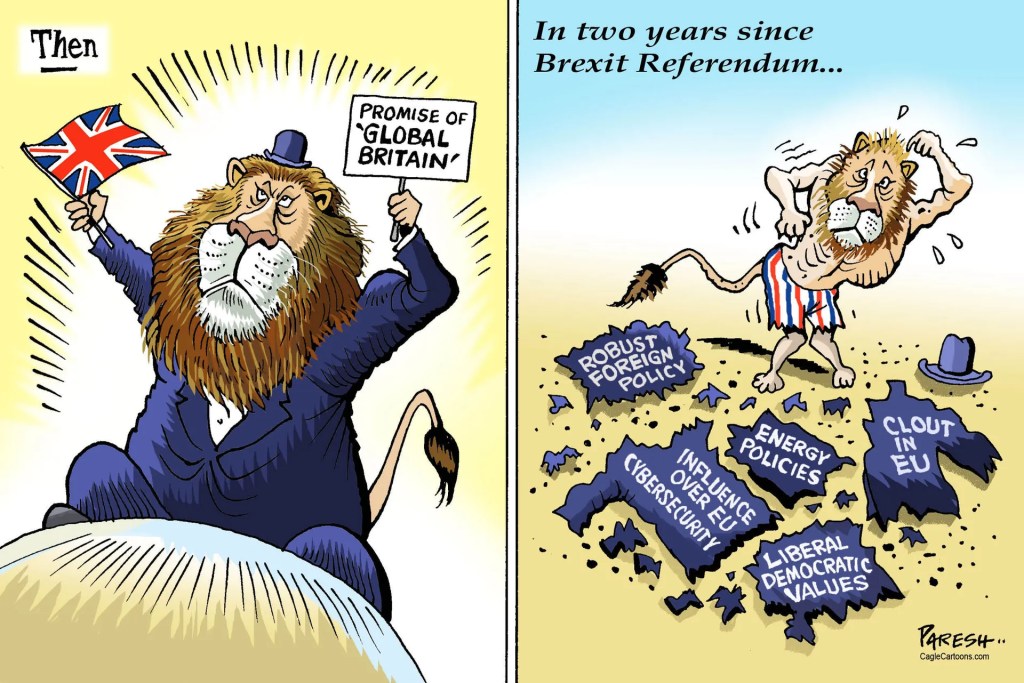
A Divided Country, Still Searching for Direction
Public opinion trends further reinforce this fragmentation. Although a growing share of the electorate associates Brexit with economic underperformance, there remains limited political consensus around rejoining the European Union. This has produced a policy paradox: widespread recognition of economic costs coexists with institutional inertia against strategic reversal, effectively locking the UK into a constrained policy space.
In response, successive governments have attempted to recalibrate relations with Brussels through selective cooperation in trade facilitation, security coordination, and regulatory dialogue. However, these efforts have not yet offset the broader structural adjustments that followed withdrawal from the EU framework, particularly in terms of long-term investment confidence and productivity dynamics.
Ultimately, the Brexit decade reveals a deeper structural tension within British political economy: the mismatch between sovereignty-driven political narratives and the realities of deeply integrated European supply chains and regulatory ecosystems. As the UK enters its second post-Brexit decade, the central policy question is no longer whether Brexit worked, but whether its economic and institutional costs can be stabilized within a sustainable growth model outside the European Union.

